Desarticulação é principal entrave para sucesso da eficiência energética no Brasil

Fonte: Procel Info

Acesse aqui a matéria em sua fonte.

O que as instituições públicas e as associações de classe podem fazer para que as metas previstas de economia de energia e redução de demanda se realizem e envolvam agentes privados ainda pouco empenhados em investir em eficiência energética são algumas das questões abordadas em um estudo pioneiro liderado pelo Procobre (Instituto Brasileiro do Cobre) e pelo Excen (Centro de Excelência em Eficiência Energética) da Unifei (Universidade Federal de Itajubá), com o apoio do MME (Ministério das Minas e Energia).

A pesquisa revela não só as iniciativas e possibilidades de cooperação e sinergia em eficiência energética conduzidas por diferentes instituições no país – atualmente, de cerca de 80 ações – mas também a oportunidade de uma maior articulação dos organismos na hora de desenvolver atividades de consumo consciente do insumo energético, o que é tido como principal obstáculo para que a eficiência energética entre na agenda do setor produtivo.

Para chegar a essa conclusão, os pesquisadores do Excen, professores Jamil Haddad e Luiz Augusto Horta Nogueira, contam que foi necessário elaborar uma lista das atividades em eficiência energética associadas a uma ou mais instituições pesquisadas, relacionando essas iniciativas quanto aos usos finais, à existência de atividades transversais de treinamento ou capacitação, gestão energética e às ações de marketing, entre outros parâmetros considerados.

“Nos últimos anos, construímos uma boa estrutura de ações e programas de eficiência energética e definimos alguns instrumentos legais e regulatórios – etiquetagem, programas nacionais de conservação como o Procel, o PEE (Programa de Eficiência Energética) das distribuidoras, programa de índices mínimos de eficiência energética, Plano Decenal de Expansão de Energia 2026, Plano Nacional de Energia 2030 e o Plano Nacional de Energia 2050 –, mas o país ainda é carente – entre outras ações – de uma base de dados compartilhada, alimentada sistematicamente com informações confiáveis para avaliação dos progressos alcançados e ajuste do potencial de conservação de energia”, alerta Haddad.

Para o diretor executivo do Procobre, Glycon Garcia, as iniciativas de eficiência energética também não podem renunciar aos mecanismos de gestão, à troca de informações, articulação e coordenação. “Deve-se buscar sinergia nas iniciativas de eficiência energética que apresentam semelhanças e complementariedades. A execução das ações pode ser desempenhada de forma descentralizada e por vários agentes, mas os resultados precisam ser mensurados e monitorados periodicamente para que sua permanência seja justificada e isso resulte em uma base de dados legítima”, salienta Garcia.

O estudo, em sua primeira etapa, revisita todas as iniciativas de eficiência energética em curso desenvolvidas no país por ministérios e instituições públicas, um tema essencial para a competitividade e sustentabilidade do Brasil. A partir das atividades identificadas, são propostas 1) ações de caráter compulsório e abrangente e 2) ações de caráter voluntário e restritivo, sugerindo algumas diretrizes como a manutenção e integração dos atuais programas e ações de eficiência energética e o desenvolvimento de uma base de dados compartilhada. A isso, são apresentados nove projetos para o avanço da eficiência energética no Brasil.

Nesse sentido, o estudo propõe a elaboração de um projeto piloto em algum setor industrial que possibilite reunir e analisar os dados e informações possíveis de serem disponibilizados para, em seguida, compartilhá-los. Em uma etapa posterior, haveria separação das iniciativas sob o ponto de vista setorial, possibilitando estudos específicos, perspectivas tecnológicas e subsídios à estimativa do potencial de eficiência do uso da energia em segmentos industriais como a cadeia do alumínio (bauxita, alumina e alumínio); celulose e papel; cadeia siderúrgica; cerâmica; alimentos e bebidas; e química (petroquímica, gás-química, alcoolquímica, fertilizantes e sodacloro).

A etapa seguinte trata de uma modelagem de um sistema de informações com indicadores para o setor industrial, com detalhamento das informações disponibilizadas anualmente pelo Balanço Energético Nacional, com estatísticas que permitam comparações – benchmarking – entre as empresas e frente ao contexto internacional, e a avaliação de consumos específicos de referência, como a “Best Available Technology” e a inferência de potenciais de economia de energia.

As recomendações também abrangem a permanência das principais fontes de financiamento dos projetos de eficiência energética já existentes; a expansão da geração distribuída sem prescindir das mudanças de natureza tecnológica como a forma de contratação de energia e a continuidade de programas de conscientização das pessoas sobre o uso racional do insumo energético.

“A eficiência energética em indústrias, mediante tecnologias e práticas operacionais corretas, incrementa sua competitividade e atenua impactos ambientais. Observando a experiência dos países industrializados, é possível reforçar as ações governamentais de fomento à eficiência energética, coletando e difundindo informações que indiquem potenciais e prioridades e estimulem a redução das perdas de energia”, afirma Horta.

Os resultados obtidos com a experimentação dos projetos em subsetores poderão subsidiar medidas similares a serem adotadas progressivamente em toda a indústria brasileira, permitindo efetuar comparações consistentes no setor produtivo, definir metas de desempenho energético e implantar o monitoramento dos resultados.

* Com informações do Procobre
Publicado em Artigos Diversos, Brasil, Eficiência Energética, Leis | Com a tag , , , , , | Deixe um comentário

New NIBS-NBI Energy Tool to Help Cities Set Framework to Achieve Performance Goals

Fone / From: NIBS

Clique aqui para acessar a matéria em sua fonte / Click here to read this arcticle directly from NIBS Website.

The National Institute of Building Sciences (NIBS) and New Buildings Institute (NBI) have developed a new tool, with support from the U.S. Department of Energy and the Northwest Energy Efficiency Alliance, to help jurisdictions tackle energy use in buildings. The Life-Cycle Energy Performance Framework for Cities is now available on the WBDG Whole Building Design Guide® web portal.

Buildings are responsible for a significant portion — often the largest portion — of energy use or greenhouse gas (GHG) emissions within city borders. Yet, the cities setting measurable objectives to reduce energy use or GHG emissions are finding policies focused only on new construction are not enough to achieve such goals. They need a coordinated approach that also addresses the existing building stock.

NIBS and NBI convened a team of energy thought leaders to identify strategies cities could implement to address the energy use of buildings in a holistic fashion. Cities require comprehensive, long-term strategies that include policies, programs, administrative resources, tools and on-going funding sources. A few jurisdictions have some of these pieces in place. However, up until now, no single resource has described how these pieces relate to each other or how to implement them as a coherent whole. The Life-Cycle Energy Performance Framework for Cities does just that.

The web-based resource offers introduction and guidance tabs. Through a series of levels and drop downs, users can then customize their own path to implement life-cycle-based energy policies and print out tracking reports based on their responses. The top level, the organizational basis of the Framework, consists of four overarching categories: Leadership; Data, Analysis, and Applications; Mechanisms; and Ensuring Results. The categories are each broken into components with a brief description of the policy action, and examples and links for more information.

Each component has individual activities, structured as Policies, Actions, Resources and Tools, that the user can select based on the priorities and potential strategies of interest to the jurisdiction.

  • Policies require legislative or regulatory action by city leadership (mayor, city council, etc.), or within administrative agencies.
  • Actions are steps that generally should be undertaken at an administrative level.
  • Resources are either investments or capabilities that support realization of program goals.
  • Tools can be developed internally at the city level or at a national level and provide the mechanism to accomplish a specific strategy.

The user can use the drop-down menus associated with each individual element to designate the status of the element, including:

  • In Place: currently implemented and functioning.
  • In Process: in the process of being implemented.
  • In Planning: resources and processes are being identified for implementation in the near term.
  • In Projections: to be implemented at some point in the future.

To access the tool, users must have an account on the WBDG, which will allow them to customize their Framework, add notes on their timeline, list items to track, generate reports and update content as their jurisdictions make progress.

Log in to start using the Life-Cycle Energy Performance Framework for Cities. Don’t have a free WBDG account? Create one now.

Publicado em Artigos Tecnicos, Eficiência Energética, Sustentabilidade | Com a tag , , | Deixe um comentário

Receita Federal define EPIs como insumo para fins tributários

Fonte: AEC Web

Por: Yuri Soares

Acesse aqui a matéria diretamente em sua fonte.

A Receita Federal do Brasil decidiu, por meio da Solução de Consulta COSIT nº 183/2019, que equipamentos de proteção individual (EPIs) fornecidos a empregados alocados em atividades de produção de bens ou de prestação de serviços podem ser considerados insumos, para fins de apuração de créditos da Cofins (Contribuição para o Financiamento da Seguridade Social) e da Contribuição para o PIS/Pasep.

O entendimento foi tomado com base em julgamento do STJ (Superior Tribunal de Justiça). A Receita define, ainda, que uniformes fornecidos aos empregados não podem ser considerados insumos, exceto em casos de empresas que explorem as atividades de prestação de serviços de limpeza, conservação e manutenção.


Publicado em Brasil, Leis | Com a tag , | Deixe um comentário

Reduce PUE to unlock capacity in data centers

Fonte (Source): Consulting Specifying Engineer

Por (By): SUSHIL KUMAR, PE, CEM, LEED AP, MBA, EXP GLOBAL, LOS ANGELES MAY 15, 2019

Lei a matéria diretamente em sua fonte, clicando aqui.

Read this article directly from CSE wesite, clicking here.

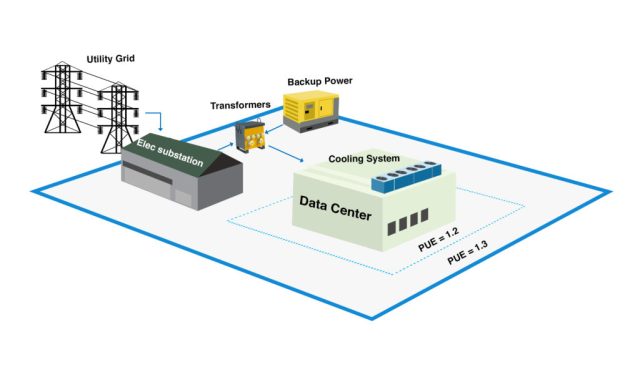
CSE1904_WEB_FPUE_01-1024x612Figure 1: This shows examples of data center PUE boundaries. The most commonly reported boundary is shown by dotted line. Courtesy: EXP Global

Learning objectives

  • Define power usage effectiveness, its origin and current industry trends.
  • Learn about IT capacity, stranded capacity, equipment capacity and equipment IT capacity.
  • Understand how to create new sources of revenues by reducing PUE and increase return on investment by improving PUE.

Power usage effectiveness has long been used as a benchmark for data center efficiency, but it is seldom looked at as a tool to unlock stranded information technology capacity and to create a new source of revenue. This new capacity takes little time to build and comes with minimal capital investment. The return on investment is less than six months and can help corporations postpone capital expense required to build capacity.

PUE is a metric that describes how efficiently a computer data center uses energy. It is the ratio of the total amount of energy used by a data center facility to energy delivered to computing equipment. It was originally developed by Green Grid and was quickly adopted by many data center players. PUE was published in 2016 as a global standard under ISO/IEC 30134-2:2016.

Reducing PUE not only lowers utility bill operating expenditures, but also allows for a lower cost of construction (a capital expense), thereby improving return on investment for investors. In existing data centers, it can unlock new revenue potential using existing mechanical, electrical and plumbing infrastructure. Most analysis around lower PUE only accounts for cost savings from reduced power usage. When new revenue potential is included and could lead to a much higher return for the owners and operators.

Uptime Institute conducts an annual survey of average PUE for data center player across the globe. In 2018 it reported an average PUE of 1.6 across 713 participating data centers spread across the globe with the majority of the participants located in the U.S. and Europe. Uptime Institute’s research and surveys have found that PUE has dropped consistently during the past 10 years from a high of 2.5 in 2007 to 1.6 in 2018.


CSE1904_WEB_FPUE_01-500x299

Google has aggressively adopted PUE as a metric to keep its own data center energy usage low. Its data center portfolio has some of the lowest PUE in the world. In Q4 2018 it reported a trailing 12-month PUE of 1.11 across its fleet of 15 data centers globally. The company carefully defines IT load as processing power only; data center losses include power used by mechanical equipment, heat rejected by electrical equipment including uninterruptible power supplies, switchgear and feeders, plus utility transformers and electrical substation losses.

Defining PUE

There is a lot of ambiguity and inconsistency in how to measure PUE. Some players will include substation, step–down transformers, etc. in the PUE formula whereas others will measure power usage at the facility level. Telecommunication companies use centralized rectifiers, with 4 to 12 hours of lead-acid or valve-regulated lead-acid battery backup and feed direct current to switching and routing equipment. Most data entry operators use UPS systems with back–up batteries and feed alternating current to server racks, with a step–down transformer built into the server blades. These differences lead to inherent differences in PUE for different kinds of facilities.

Improving PUE not only helps with reducing energy cost but also can unlock valuable electrical and cooling infrastructure capacity. This will allow data center players to add revenue-generating IT capacity using existing electrical and mechanical infrastructure. Essentially this means adding sellable capacity without major infrastructure upgrade. The caveat is physical space constraints, which will not be considered here.

Measuring capacity

Most co-location data center companies sell IT capacity in kilowatts. IT capacity is sacrosanct for them. The more the IT capacity, the greater the potential revenue. Each kilowatt of additional IT capacity has a revenue potential of $200 to $300 per month. We will use $250/kilowatts/month in our calculations below.

We normalized capacity of mechanical, electrical and plumbing equipment in terms of kilowatt of IT capacity it can support. This allows for an easy comparison and analysis method. To achieve this, we defined a new term equipment IT capacity for each piece of mechanical cooling and electrical equipment in a data center. Equipment IT capacity is a function of peak PUE of the system, which in turn is a function of inefficiencies throughout the system.

Equipment IT capacity is measured in kilowatts.

e = equipment

x = a variable and is the name of equipment for which IT capacity is calculated

Equipment IT capacity for electrical equipment is calculated as below:

For example:

The available capacity of the switchboard is defined as the maximum continuous–duty capacity for the primary switchboard; redundant capacity is not counted. For example, some switchboards cannot be loaded more than 80% of their nameplate capacity for continuous operation. This data shall be obtained by the manufacturer and used in the calculations.

PUE of a data center varies with time and we define peak PUE as the highest observed PUE for the site during normal working conditions through the course of the year.

For cooling equipment (chillers, computer room air conditioning, air handling unit, etc.) equipment IT capacity is defined as the available IT cooling capacity of primary cooling equipment on design day; again, redundant capacity is not counted.

For example, a nominal 600-ton packaged air–cooled chiller could only provide 500-ton capacity on the design day defined as 0.4% ASHRAE annual cooling design condition after de-rating for 30% propylene glycol. A similar concept could be applied for computer room air conditioning units or other pieces of equipment.

For uninterruptible power supplies and rectifiers, equipment IT capacity is defined as maximum continuous duty capacity.

Note: The analysis above assumes that IT, cooling and other miscellaneous load is fed from the same source (utility service, generator and main service board), which is usually the case in most applications.

CSE1904_WEB_FPUE_02-500x277

Calculating costs

In Figure 2, the computer room air conditioning, utility, generator set, automatic transfer switch and main switchboard capacity at the data center far exceeds current IT load. Data center operators and planners can use this to make informed decisions about the cost of adding IT capacity at their sites. Using this information, operators can come up with a step function showing cost of the mechanical, electrical and plumbing upgrade for each additional 250 kilowatt of IT load. This information could be very powerful.

This solves capital allocation problem for large data center owners. Owners now have a one-page cost step function for each data center, which they can use to figure where to install new racks with minimum capital expense. This data is rarely available and will solve an important problem for owners and operators.

Figure 3 shows the impact of lowering PUE to 1.4 from the current 1.75. It shows a significant increase in IT capacity of utility, generator set, automatic transfer switch and main switchboard. Lowering PUE unlocks IT capacity of electrical equipment because the power used by mechanical and other supporting equipment is reduced.

CSE1904_WEB_FPUE_03-500x284

Completing a financial analysis 

Situation: The facility is a 1 megawatt data center with peak PUE of 1.75 built in 2010. The data center is maintainable with the 2N electrical power system and N+1 mechanical capacity. It currently is operating at capacity. Available capacity of electrical infrastructure is 1.75 megawatts.

PUE improvement project: Mechanical energy–efficiency improvements lowered peak PUE to 1.4. Mechanical improvements included:

  • Increasing supply air temperature and chilled water supply temperature. Containment of hot aisles and an increasing space temperature setpoint.
  • Optimizing sequence of operations of chilled water pumps and set points of computer room air conditioning units.
  • Installing adiabatic cooling pads on the condenser of the chiller plant.
  • Adding isolation dampers that allowed shutting down redundant computer room air conditioning units. Rebalancing system to move air where needed.
  • Optimizing lights and lighting controls.

Impact of PUE improvement on profit: Table 1 shows an impact on earnings before interest, tax, depreciation and amortization (gross profit) when PUE improvement resulted in both added IT capacity and savings from improved energy efficiency. In this scenario, 250 kilowatt of IT capacity was gained, which provided an additional $0.75 million annual revenue. Power cost (operating expenditures) didn’t change because mechanical, electrical and plumbing power usage was moved to support additional IT load. For sake of simplicity, it is assumed that expenditures only include power costs. Other costs are fixed and will not change because of peak PUE adjustment. Profit increased by 50.4%. Simple payback for this improvement is less than nine months.

Table 2 shows impact on gross profit when PUE improvement resulted in savings because of improved energy efficiency only. In this scenario, lower PUE leads to reducing power demand by 350 kilowatts. Reducing electrical demand leads to reducing power cost by $300,00. Again, expenditures only include power costs. Other costs are fixed and will not change because of peak PUE adjustment. We can see that profit increases by 20.3%. Simple payback is less than 10 months.

PUE has long been used as a benchmark to measure data center efficiency. Lowering PUE helps in reducing energy cost in data centers. Reducing PUE also unlocks new IT capacity that can allow data center owners to unlock new sources of revenue.


Publicado em Artigos Tecnicos, Eficiência Energética | Com a tag , , , , | Deixe um comentário

A pressa ainda é uma das grande inimigas da perfeição…

Embora este seja um ditado muito antigo (ouvia de minha avó, quando era um menino..), ainda se vê por aí a sua aplicação em grande escala e em grandes estilos…

Neste caso, vou me ater ao nosso segmento de operação e manutenção.

Vejam que não é nada incomum nos depararmos com situações onde as equipes de manutenção (volante ou residentes) não conseguem cumprir totalmente o plano de manutenção que lhes fora designado, ou mesmo, cumprem em tempos de execução minimamente duvidosos.

Em alguns casos, onde se é possível acompanhar resultados (CMMS implantado), verifica-se ainda um comportamento nada normal em seu backlog, ou até mesmo em sua volumetria de chamados, corretivas não planejadas, etc.

Voltando aos primeiros parágrafos deste post, onde abordei a questão sobre a “pressa”, vemos hoje tempos absurdamente pequenos, muito pouco “recheados” de metodologias ou conhecimentos técnicos, dedicados à elaboração de planos de manutenção e operação customizados para as necessidades de clientes, assim como para o correto dimensionamento de equipes que executarão estes planos, o qual deveria levar em conta tempos de execução, de preparação e deslocamentos, assim como levando também em conta os demais tempos compartilhados com as equipes (chamados, etc…).

Complementarmente, sente-se muito a falta de uma análise aprofundada sobre a matriz de criticidade sobre os ativos à serem mantidos e operados.

Enfim, para onde foram estes cuidados???

O que se acaba verificando é a adoção de uma ferramenta composta por dois fatores básicos….. Experiência e Similaridade!

Esta “ferramenta” que vem sendo utilizada em larga escala, acaba por “fechar os olhos” das áreas de manutenção para a atividade de planejamento, e veja que me refiro aqui também às mantenedoras, que em função da correria imposta por muitos de seus clientes, acabam passando por cima de conceitos básicos e fundamentais.

Com isto, nos deparamos, de fato, com planejamentos mal executados e desprezando características e fatores de criticidade, com o subdimensionamento de equipes, que misturam de forma equivocada os conceitos de manutenção e operação, e com a morte lenta das áreas de PCM – Planejamento e Controle da Manutenção.

Por esta razão, vemos também a subutilização de sistemas de gestão implantados em muitas empresas, as quais basicamente se preocupam com o registro de ordens de serviço, sem ter qualquer preocupação com a confiabilidade em seu processo.

Solução para isto?

Bom, enxergo claramente a necessidade de se revisar primeiramente a missão e os objetivos de sua área, em prol da adequada gestão de seus ativos; necessário também adequar a estrutura de gestão e PCM em sua instituição, seja ela orgânica ou inorgânica (cobrança sobre as terceiras contratadas).

Não existem mágicas…

Como dica, deixo aqui a referência a dois cursos que acontecerão neste segundo semestre, para aqueles que estiverem interessados em rever os seus conceitos:

Publicado em Artigos do Autor, Cursos & Seminarios / Congressos, Facility Management | Com a tag , , , , , , , , , , , , | Deixe um comentário

A eficiência energética como fator de competitividade e alternativa de transição

Fonte: Revista O Setor Elétrico – Abril 2019

Divulgado por: Procel Info

Por: Roberto Musser, da UFBA

Acesse aqui a matéria diretamente em sua fonte.

Em tempos de Geração Distribuída (GD), Smarts e Audiência Pública (AP) 001/2019 da Agência Nacional de Energia Elétrica (ANEEL) sobre o sistema de compensação da micro e mini-geração distribuída de energia elétrica (Portaria 482/12) fica latente a assimetria de informações entre os players. Cada um com a sua perspectiva de defesa de interesses, com polarizações que vão de pequenos empreendedores independentes até grandes corporações com discursos por vezes antagônicos e, por vezes, conciliadores.

Um leque de variedades e variações que, ao mesmo tempo em que preocupa pela complexidade do tema, traz uma excelente sensação da satisfação real em presenciar discussões em alto nível desse que é um tema estratégico para o país e para as futuras gerações.

Na rodada realizada em São Paulo em 14 de marco num auditório cheio, com direito a “torcidas” que se manifestam por uma ou outra corrente, ficaram evidentes os que defendiam o solar, as redes (distribuidoras) e, nesse meio, junto e misturado, o pessoal bioenergético, acadêmicos, bancos, sistema S. Escos, fornecedores de equipamentos e serviços etc.

Essa efervescência transcorre por meio de um debate que envolve mitologia, história, instigação, respostas de forma madura, democrática e, principalmente, brasileira, e isso é muito bom!

A forma de condução do tema pela ANEEL merece destaque. Fica claro que, mesmo com todas as críticas à sua atuação, existe uma inteligência estruturada e competente com a clara percepção de que o novo cenário da energia elétrica já está aí e é irreversível.

Existem aprendizados de outros países que podem ser referência, mas são improváveis que obtenham os mesmos resultados ao implantar estes modelos. O benchmarking limita-se às práticas e ao entendimento de seus mecanismos de construção, mas é imprescindível uma adaptação, diria até uma “reconstrução” para a nossa realidade, pois temos uma característica especifica dos nossos elétrons: federal, estadual, municipal e o mais novo de todos os elétrons, os empreendedores independentes.

Clique no link abaixo e leia a reportagem na íntegra
Revista O Setor Elétrico Abril 2019.pdf
Publicado em Artigos Diversos, Brasil, Eficiência Energética | Com a tag , , | Deixe um comentário

Attention to detail: Employing nuanced design strategies for senior living facilities

Fonte (Source): Consulting Specifying Engineer

Por (By): KIMBERLY BOONE AND JANICE CENA MAY 15, 2019

Acesse aqui a matéria diretamente em sua fonte / Click here to read this article directly from CSE Website.

With a rising senior population, there’s a vital need for more senior living facilities and improved senior living care capabilities.

blog_seniorliving

Photo courtesy: Dewberry

With a rising senior population, there’s a vital need for more senior living facilities and improved senior living care capabilities. One important trend in designing for today’s senior care facilities is the ability for the facility to adapt from an active adult senior living space to one that accommodates assisted living and nursing care needs. Often referred to as continuing care facilities, many of today’s senior care facilities allow for senior citizens to move from unit to unit in the building depending on their needs.

Adapting these spaces to cater to the special needs of each user can be quite challenging. There are a number of physiological and psychological factors that must be considered when designing a senior care facility, particularly when regarding memory care. Safety and security is a primary concern, however, designers also need to be conscientious in treating the facility as a living space and avoid designing something that would feel restrictive or institutional.

To overcome these challenges, landscape architects and interior designers have come up with design solutions that put a unique emphasis on the details.

Considerations for External Spaces

One exterior design technique is making sure exterior gardens evoke a sense of freedom and give residents space to walk around, while also enclosing the space so the residents don’t wander off and endanger themselves. This can be accomplished by implementing flora and fauna that prevent the senior citizen from exiting the facility. Additionally, providing ample views of the skyline can prevent feelings of claustrophobia.

Materials for hardscapes also need to be considered because of the limited mobility of many of the residents. For example, cobblestones wouldn’t be an ideal paving surface due to the possibility of balance issues. Instead, look for a flatter surface that could prevent trip hazards. In creating a walking path or area, also provide ample areas for respite by including benches or other seating spaces.


blog_seniorliving2-500x224

Foliage is another important feature. Poisonous or thorny plants are a no-go in a garden visited by senior citizens with memory care needs because of the threat of residents coming into contact or accidently consuming the plants. Similarly, a lot of medications make one sensitive to smells. Therefore, avoid any foliage that is super fragrant. On the other hand, there are many plants that can be implemented for their medicinal and soothing qualities, like lavender.

Considerations for Indoor Spaces

For the interior, a point of emphasis is made on the entrances and exits to ensure the safety and security of the senior residents. One theoretical strategy to deter elderly from walking out in a state of confusion is to make the flooring near the entrance darker to give the illusion of a hole, which they are more likely to avoid. Many facilities have clear sight lines to doorways so employees can monitor the residents, or have the doors alarmed.

Color is another factor that must be considered. In older age, corneas are not able to perceive some colors such as yellow the way younger people do and are therefore avoided throughout the facilities.

With regard to lighting, avoid a sharp transition from bright light to a dim area because the eye adjusts much slower in seniors, which can result in falls or other accidents. Same goes for choosing fabrics and patterns on carpeting and seating materials–avoid anything that’s too distracting or too busy, because it could throw seniors off their balance. Finally, reflective surfaces should be minimized to avoid frightening or confusing the elderly. To achieve this, interior designers look to cover windows and avoid glossy table top surface finishes.

blog_seniorliving-500x224

In essence, successfully designing for senior living incorporates studies in sociology, psychology, and other disciplines—requiring landscape architects and interior designers to actively consider “who is the user?” in all aspects of the design. Once we have an understanding of who will be occupying the space, we can adapt strategies, no matter how big or small, to aid the safety, security, and well-being of those occupants.

___________________________________________

This article originally appeared on Dewberry’s blog. Dewberry is a CFE Media content partner.

Publicado em Artigos Diversos | Com a tag , , , | Deixe um comentário

Aeroportos Santos Dumont e de Congonhas serão leiloados até 2022

Fonte: AECWeb

Por: Yuri Soares

Acesse aqui a matéria diretamente em sua fonte.

O ministro da infraestrutura, Tarcísio Gomes de Freitas, informou em reunião realizada com empresários no Rio de Janeiro, que o Governo Federal pretende conceder à iniciativa privada mais 44 aeroportos da Infraero (Empresa Brasileira de Infraestrutura Aeroportuária) até 2022.

Segundo Freitas, o modelo de leilão de concessão em blocos de 12 aeroportos, realizado em março, foi testado e aprovado. Na ocasião, a arrecadação total foi de R$ 2,377 bilhões em outorgas para os cofres públicos. O valor foi 986% maior que o lance mínimo estabelecido pelo governo (R$ 218,7 milhões).

A próxima rodada de concessões, que corresponde a sexta de aeroportos, está prevista para outubro de 2020, e irá abranger 22 terminais divididos em três blocos regionais: Sul, Centro-Oeste e Norte 1. A sétima rodada deverá acontecer entre o fim de 2021 e o início de 2022, com a concessão de mais 22 aeroportos dispostos entre os blocos Norte 2 e dois do Sudeste. Fazem parte desta etapa de concessões os aeroportos Santos Dumont e de Congonhas.

De acordo com o ministro Gomes de Freitas, esses dois aeroportos foram deixados por último, por serem muito importantes para a estabilidade financeira da Infraero. “Estamos convidando o investidor a conhecer o mercado brasileiro e já vir para a sexta rodada. E é como se a gente afirmasse assim: o melhor está ficando para o final”, detalhou.

O ministro disse, ainda, que a concessão dos terminais aeroportuários irá impulsionar o mercado de aviação civil e auxiliar em uma mudança de vocação da Infraero, que deverá direcionar sua atenção aos aeroportos regionais.

Publicado em Artigos Diversos, Brasil | Com a tag , , , , , , | Deixe um comentário

What you need to know about building commissioning / O que você precisa saber sobre comissionamento

A matéria abaixo foi recentemente divulgada por uma instituição norte-americana que promove a difusão de conhecimentos e artigos de engenharia, conhecida como Consulting-Specifying Engineer.

Embora o texto original esteja em inglês, ele possui uma abordagem de fácil compreensão e tenta demonstrar o porque se deve conhecer e buscar por um comissionamento em uma edificação.

Aqui no Brasil, também vivenciamos alguns momentos similares aos descritos no artigo, passando de uma etapa onde se via o comissionamento aplicado em sistemas e instalações específicas, tais como em sistemas de potência, instalações industriais ou especiais, para uma etapa mais recente, a partir da segunda metade da década de 90, quando nos deparamos com os primeiros edifícios “inteligentes” que por aqui surgiram.

Esta “difusão” do termo comissionamento se tornou ainda mais fortalecida com a chegada da norma LEED ao Brasil, haja vista que, conforme vocês poderão ler abaixo, algumas instituições norte-americanas e europeias passaram a incorporar o comissionamento como um requisito ao processo principal.

Entretanto, considerando o “tom” que fora dado ao artigo, veja também que ainda nos deparamos (Brasil e Estados Unidos) com uma certa falta de visão e desconhecimento de alguns importantes personagens como proprietários, gerenciadoras, projetistas, construtores, instaladoras e equipes de operação e manutenção.

Pôde-se dizer que há uma falha de “integração” neste processo, pois, como já dissemos aqui neste blog, os projetos já se iniciam “desconectados” entre si, ainda que tenham de operar de forma conjunta mais adiante.

Enfim, recomendo que leiam a matéria a seguir e tirem as suas conclusões.

—————————————————————————————————————–

Fonte (Source): Consulting Specifying Engineer

Por (By): JOHN WIXSON MAY 3, 2019

Acesse aqui a matéria em sua fonte / Click here to read this article directly from CSE Website.

The unprecedented technology advancements of the last three decades have only made the built environment more sophisticated, but at the same time the perceived relevance of commissioning has suffered.

Screen-Shot-2019-04-14-at-11.29.17-PM-1024x496

Building commissioning has experienced a rise and fall in terms of reputation, understanding, and value. In the 80s and 90s, the introduction of computerized, direct digital controls (DDC), brought new complexities to the built environment and energized the buzz around building commissioning. The unprecedented technology advancements of the last three decades have only made the built environment more sophisticated, but at the same time the perceived relevance of commissioning has suffered.

Early on, building commissioning was deemed so important that sustainability efforts and later building codes, like LEED and IECC, adopted it as a common practice. While this helped to ensure adherence to the guidelines developed by these organizations, it diluted the building commissioning process. A process that once focused on the operation, maintenance, and long-term success of a building, became a check box commodity. We think it’s time for commissioning to make a comeback.

We say it with confidence, building commissioning is one of the best risk management strategies you can have in construction. If you are still on the fence about commissioning, here is what you really need to know.

Why do I need commissioning on my project?

Building systems are more complex than ever. The jump from pneumatic controls to DDC was only the beginning. As technology improved, every system soon developed its own set of capabilities and controls. What many people don’t realize is that these systems have to be taught to work together. Issues surrounding programming and systems integration are often the most frustrating part of the construction process. Imagine spending millions of dollars on a brand-new building, but then when you move in nothing works. A commissioning agent’s main focus is to ensure all the building systems communicate properly and work seamlessly together.

How do I choose a good commissioning agent?

Make sure your commissioning agent understands that they are the owner’s representative. Most owners’ primary business and expertise is not construction or facility management, but they still need a building that meets their specific needs. A commissioning agent is an expert that represents the owner’s business, goals, and needs. They are onsite, interpreting plans, verifying and testing equipment, ensuring that what the owner needs is in the plans and built as such. As the owner’s representative, a commissioning agent creates a smooth transition from design to construction and from construction to occupancy.

What is the most important factor to ensure commissioning is successful on a project?

A collaborative commissioning agent that is empowered by the owner they represent. Commissioning professionals are in the unique position to help bring everyone’s construction efforts to a mutually beneficial conclusion. It isn’t about finger-pointing or being the smartest person in the room. The purpose of every project is to create a functional space for experiences. With that in mind, the commissioning agent must come to table ready to help everyone collaborate to achieve the owner’s goals. Owner’s that encourage this collaborative effort will have a more successful project. By empowering your commissioning agent, you’ll help them drive issues to resolution and most importantly, construction to completion.

We believe commissioning is valuable at any stage of building life and that in today’s world it’s more important than ever. That’s why, in the coming weeks, we’re going to take a closer look at these questions, begin to redefine commissioning, and give it the comeback it deserves. If you have questions about commissioning or engaging a commissioning agent, click here – we’re happy help.

________________________________________________

This article originally appeared on Henderson Engineers’ website. Henderson Engineers is a CFE Media content partner.


Publicado em Artigos Tecnicos, Comentarios do Bloggeiro, Comissionamento, Eficiência Energética, Sustentabilidade | Com a tag , , , , , , | Deixe um comentário

Secovi-SP atualiza manuais de escopo para atenderem à NBR 15.575

Fonte: AECWeb / SECOVI

Por: Yuri Soares

Acesse aqui a matéria em seu veículo original.

Manuais de Escopo de Contratação de Projetos e Serviços terão capítulo sobre atendimento à Norma de Desempenho e modelos de memoriais descritivos

Manuais descrevem atividades e produtos de cada etapa do projeto (Créditos: Matej Kastelic/ Shutterstock)

O conteúdo dos Manuais de Escopo de Contratação de Projetos e Serviços para a Indústria Imobiliária, elaborado sob coordenação do Sindicato de Habitação do Estado de São Paulo (Secovi-SP), foi atualizado para atendimento à Norma de Desempenho de Edificações (ABNT NBR 15.575:2013).

O conjunto de documentos, que descreve atividades e produtos de cada etapa do projeto, recebeu três novidades. A primeira se refere a inclusão do capítulo “Escopos para Atendimento à Norma de Desempenho” nos manuais de Escopo aplicáveis. A capa dos documentos passa a receber o selo NBR 15.575.

O Guia para utilização dos Escopos de projeto de edificações habitacionais também foi modificado para atender à norma. O material visa esclarecer os critérios utilizados no desenvolvimento dos escopos de desempenho e apresenta orientações gerais para seu atendimento nos diversos projetos de um empreendimento imobiliário.

A terceira e última mudança abrange os Modelos de Memoriais Descritivos, documentos que indicam premissas e considerações do projeto de um empreendimento, incluindo informações relativas ao atendimento dos requisitos previstos na referida norma.

Para ler os manuais, acesse: http://www.manuaisdeescopo.com.br/memoriais/

(Com informações do Secovi-SP)

Publicado em Normas Técnicas | Com a tag , , , , , | Deixe um comentário