Building automation + integration = efficiency

Fonte (Source): Consulting – Specifying Engineer

Por (By): Anil Ahuja, CCJM Engineers, Chicago, and Rocky Moore, American Auto-Matrix

Acesse aqui a matéria em sua fonte.

The building automation system (BAS) has become key to ensuring all systems within a building are working effectively and efficiently. Integration of lighting, HVAC, fire/life safety, and all other engineered systems requires the designer to specify an appropriate system.

Learning objectives

  • Compare various protocols that govern the building automation system (BAS).
  • Demonstrate how to integrate all systems into a “smart building” for the most effective integrated design of automation and control systems.
  • Apply a BAS to improve energy efficiency within a building.

With the influx of the Smart Grid and smart mobile applications, the building automation system (BAS) landscape has developed much faster than mechanical, electrical, plumbing (MEP), and fire protection products over the past decade. It is the driving force for optimized operations, improved reliability, and energy savings through the integration of building systems critical to the functionality of a facility.

CSE 17 Out 4

Through the years, occupancy, comfort, safety, reliability, and efficiency have been key factors in the development of the technologies. However, as the global conscience has changed with regard to the impact of humans on the environment, and global demand for and access to energy has risen, a new driving imperative has been placed on facility professionals, engineers, and building occupants. To put it another way, humanity’s goal is to reduce our energy consumption in a manner that significantly decreases the negative impacts the consumption has on our environment, and thereby on all of nature.

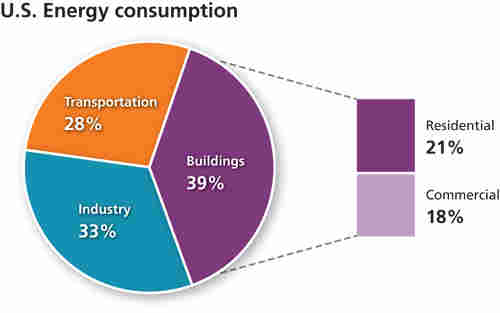
According to the Center for Climate and Energy Solutions, commercial and residential building space represents 39% of total energy consumption in the United States—more than any other sector—of which 70% is associated with HVAC systems, depending on location and environment (see Figure 1). Up to 30% is plug load and lighting. It stands to reason that integration and operation of these buildings to reduce energy consumption is a top priority. This can only be done through integration of the system with the use of technologies such as energy management and BAS, and by doing it in a manner that ensures the efficient operation of a facility. Combine this with the integration of a variety of devices via the Internet (the Internet of Things, or IoT) and software available as a monthly or annual service that does not require it be loaded on a local PC or server (the “cloud”). Engineers and designers have the ability to create more efficient buildings that use current technologies to decrease consumption. This can all be done while giving access to analytical tools designed to help pinpoint outlying operation and energy issues before they become a problem.

CSE 17 Out 5

The evolution of BAS

In the 1970s and ‘80s—due to increased energy prices—the demand for a more cost-effective building sent the BAS industry into a whirl of development to make buildings smarter. Taglines like “smart building solutions” started dotting the competitive landscape as building-automation companies were able to leverage cheapening computer technologies and bring them into the building space. This was a golden age for the BAS industry. During this peak demand to reduce consumption, BAS manufacturers globally created new and relevant technologies related to controlling a building. Competition increased and the direct digital-control solution became the standard expectation in buildings everywhere. However, most systems were disparate and only designed to control specific operations of a building, with other key components not being visible or integrated through the controlling mechanisms.

Over the next decade, the building automation landscape moved forward with larger leaps as technologies evolved at an almost exponential rate. During this time, energy prices inevitably fell and the larger cost-driven model for energy reduction began to wane as the economy strengthened. The pressure was off and, therefore, the pain soon forgotten. However, the building automation industry was still hard at work developing solutions relevant to the building market and energy reduction. The end user was beginning to ask for disparate systems that link together to allow for competitive selection of products as well as service providers.

Open protocols became an increasingly common topic of discussion as users realized the power of integration. During this time, our world was just beginning to understand the impact our energy consumption was having on the planet. However, we were still developing the solutions to dramatically reduce our environmental impact: open protocols for fully integrated systems. This was the beginning of the BACnet Project Standards Committee in 1987 (introduced as an ANSI/ASHRAE standard in 1995), and the introduction of LonTalk (now collectively referred to as LonWorks) protocol in 1990 by Echelon Corp. (It was submitted and accepted as an ANSI standard in 1999).

Today, the majority of buildings are designed with direct digital BAS. Through the evolution of protocols and technologies, the BAS has become a key component to ensuring the effective function of an entire building. In a perfect world, this would mean all buildings could take advantage of a “plug-and-play” system. However, it is not as easy due to market forces of constructing low-cost buildings and passing energy cost to leasing tenants in commercial buildings. Factors such as first cost, disparate manufacturers, legacy control systems, Internet security, and age of the building all come into play when considering the integration.

In addition, the ever-expanding cloud and the IoT has opened a whole new world of interconnectivity, allowing smart mobile devices and applications to be applied to these complex systems. Web browsers, software as a service (Internet-based software platforms, also known as SaaS), and mobile applications can be used to create a dynamic system where data-storage capacities are virtually limitless and access and control are just a touch away. With all this, the opportunity for efficiency is greater than ever. However, it is only through successful integration that this efficiency is achieved.

Publicado em Artigos Tecnicos, Eficiência Energética, Sustentabilidade | Com a tag , , , , , , | Deixe um comentário

Ensuring power quality in mission critical facilities

Fonte (Source): Consulting – Specifying Engineer

Por (By): Debra Vieira, PE, LEED AP, ATD, CH2M

Acesse aqui a matéria em sua fonte.

Many industrial, commercial, and service businesses are sensitive to power quality problems because they affect a company’s ability to compete in a global economy.

Learning objectives

  • Explain the definition of, and need for, high-quality power.
  • Identify the costs related to a power quality disturbances.
  • Recognize the value of gathering and interpreting data from power monitoring systems.

The generally accepted definition of clean power is “current and voltage waveforms that are purely sinusoidal.” However, this clean, or high-quality power does not have to be absolutely sinusoidal. So, what is the definition of high-quality power? Does the mere presence of harmonics on a power system indicate poor power quality? What about intermittent transients? Is that poor power quality?
CSE 17 Out 1

Technically, there is no single accepted definition of “quality power.” Standards exist that help define criteria that can be measured, such as voltage. However, the real measure of power quality is determined by the performance and productivity of end-user equipment. If the equipment is not performing correctly, verification of proper mechanical and electrical installation and maintenance is necessary. A faulty piece of equipment, bad bearings, or poor internal connections can affect performance. If this doesn’t resolve the problem then power quality is most likely inadequate.

When we discuss power quality, what we really mean is voltage quality—because it’s the quality of the voltage that we can address. Power is the rate of delivery of energy and is proportional to the product of the voltage and current. The equipment itself—not the distribution system—defines how much power is drawn from the system. The power system defines the quality of the voltage delivered. Because there is a close relationship between voltage and current, we must address the current to understand many of the power problems that exist. For example:

  • A short circuit can cause a voltage sag—or cause voltage to even disappear completely—due to extremely high current passing through the system impedance.
  • Lightning generates high impulse voltages that can travel on the power distribution system.
  • Distorted currents from harmonic loads also cause the voltage to distort as the current passes through the system impedance.

Sensitive electronic devices

We are heavy users of electronic devices, which are inherently sensitive to power quality. This sensitive equipment accentuates the limitations of the power system, limitations that have always existed but were rarely observed with less sophisticated equipment. Power quality issues are not easily identified. Determining how much of equipment malfunction and downtime is due to poor power quality is difficult to analyze. A power monitoring system that provides wave capture with a time stamp of the power anomaly, along with equipment status, can help facility operators correlate the cause and effect between power events and equipment malfunctions.

Since the advent of electricity, reliable, high-quality power has been desirable. In the late 1980s, computers became commonplace in our offices and homes. In the 1990s, we were able to network this equipment together to increase equipment performance.
CSE 17 Out 2

Today, we face new problems, such as faster processing speeds, increased computer chip densities, and equipment that is more sensitive to the quality of power it receives. Factories, offices, hotels, shopping centers, hospitals, and homes depend heavily on microprocessor-based loads, such as lighting controls, computers, copiers, appliances, scanners, control systems, monitoring devices, etc. It’s difficult to find equipment that lacks a microprocessor. While this electronic equipment is relatively small in size and power consumption, it is large in quantity and is in close proximity to one another.

We are interested in power quality because of its economic impact. An increasing majority of industrial, commercial, and service businesses are sensitive to power quality problems because they affect a company’s ability to compete in a global economy. Businesses that depend on high quality power, such as information technology or the continuous process industry with its programmable logic controllers, distributed control systems, industrial computers, human-machine interfaces, variable frequency drives (VFDs), motion controllers, and sensors, can suffer huge financial losses along with loss of productivity and competitiveness when power disturbances occur.

The costs related to a power quality disturbance can be categorized as direct costs, indirect costs, and inconveniences.

Direct costs: include reduced equipment efficiency, loss of raw material and production, equipment/product damage, corrupt data communications/storage, and nonproductive employee wages.

Indirect costs: more difficult to quantify and may include missed delivery deadlines, which may cause future orders to be lost.

Inconvenience: Items in this category are not expressed in lost revenue dollars but rather in how much someone is willing to pay to avoid having to deal with the inconvenience.

Ultimately, the end user is responsible for preparing appropriate performance criteria for the equipment as well as for the proper installation and correction of inadequacies in the power and grounding system. Unfortunately, many end users are unaware of the installation pitfalls and need assistance.

CSE 17 Out 3

Many times, the local utility company can provide guidance on how to properly install sensitive electronic equipment as well as modifications to the power and grounding system. The utility is motivated to provide customer service in regard to power quality to help build and maintain confidence in its distribution system. Utility engineers can provide troubleshooting analysis of harmonic issues because of the connection requirements stipulated in IEEE 519-2014: Recommended Practice and Requirements for Harmonic Control in Electric Power Systems, which defines the maximum allowed reflective harmonics allowed from a customer. However, some specialized equipment may be beyond the abilities of the utility and may require the assistance of an engineer who is knowledgeable in power quality issues.

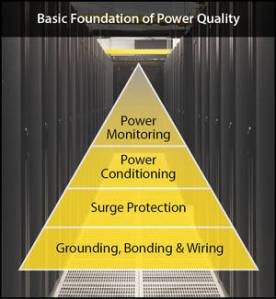
Having quality power is not accidental; it is well planned and carefully installed. The basics of power quality start by creating a solid foundation of grounding, bonding, and wiring; then layer on surge protection and power conditioning; and lastly, monitor power quality trends to provide a baseline for preventive maintenance activities to correct internal power quality problems and to define external power quality problems (see Figure 1).

Grounding, bonding, and wiring

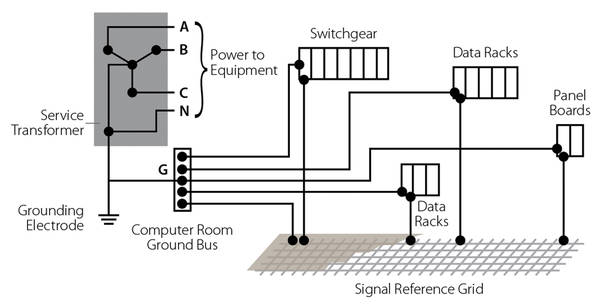
Around 80% of all power quality problems are related to grounding, bonding, and wiring problems within a facility. Is this percentage exaggerated? Possibly, but many power problems are resolved simply by fixing a few grounding connections or replacing a couple of grounding cables.

Grounding and bonding are not the same. However, they are closely related. Why do we ground and bond electrical systems? The answer can be found in NFPA 70-2014: National Electrical Code (NEC), Article 250.4(A)(1) Electrical System Grounding, which states “Electrical systems that are grounded shall be connected to earth in a manner that will limit the voltage imposed by lightning, line surges, or unintentional contact with higher-voltage lines and that will stabilize the voltage to earth during normal operation.” Furthermore, grounding stabilizes the voltage to earth during normal operations for grounded systems. Electrical equipment is grounded in accordance with Article 250.4(A)(2) Grounding of Electrical Equipment, which requires that “Normally noncurrent-carrying conductive material enclosing electrical conductors or equipment, or forming part of such equipment, shall be connected to earth so as to limit the voltage to ground on these materials.”

Noncurrent-carrying conductive materials that may become energized are bonded together to establish a low-impedance ground-fault current path in accordance with NEC Article 250.4(A)(3) Bonding of Electrical Equipment, which indicates that “Normally noncurrent-carrying conductive materials enclosing electrical conductors or equipment, or forming part of such equipment, shall be connected together and to the electrical supply source in a manner that established an effective ground-fault current path.” Bonding of equipment facilitates the operation of overcurrent devices, such as fuses, circuit breakers, or relays, during fault conditions as required by NEC Article 250.4(A)(5). Multiple parallel paths result in low impedance to facilitate overcurrent device operation.

Electrical systems do not need to be grounded to function. In fact, not all electrical systems are grounded. But when discussing electrical systems, usually the voltages are with respect to ground. The term “ground” represents a reference point—or a zero potential point—to which all other voltages refer. A zero reference voltage is critical for proper operation of electronic equipment. Unfortunately, the least amount of attention is focused on grounding, bonding, and wiring. Typical wiring and grounding problems include:

  • Faulty, loose, or resistive connections that result in heating, and potential arcing and burning of the insulation
  • Missing equipment grounds that create situations where there is no effective return path for ground-fault current
  • Power supply conduits insulated from computer cabinets with PVC conduit fittings
  • Conduit runs that end before reaching the equipment with a conductor running exposed the remaining distance
  • Green, insulated grounding conductors that are run separately from the phase conductors.

Another common grounding problem is using an isolated ground with the idea of obtaining a clean ground. Isolated grounds are typically misunderstood and misapplied because they are not actually isolated, but rather insulated, thereby eliminating parallel return paths. Installation of an isolated ground conductor is governed by NEC Article 250.146(D) Isolated Ground Receptacles and is used to reduce electrical noise on the grounding circuit by purposely insulating the receptacle from the mounting means. The receptacle grounding terminal is instead connected to an insulated equipment grounding conductor run with the circuit conductors, and is permitted to pass through one or more panelboards without connection to the panelboard grounding terminal bar. This isolated ground conductor terminates at the source of the separately derived system or service. The conductor is not isolated from the electrical grounding system.

Sometimes isolated or dedicated grounds are recommended by equipment manufacturers. These recommendations can compromise the safety and performance of the equipment, are dangerous, violate the NEC, and are unlikely to solve power quality problems.

Safety and equipment performance depend on the proper selection and installation of the power and electronic equipment grounding and bonding system. In all circumstances, the equipment and grounding system must comply with the NEC and local installation codes. A solidly grounded ac system with insulated equipment grounding conductors should be used to feed electronic loads. All metal parts of equipment enclosures, raceways, and grounding conductors are to be effectively and permanently bonded to each other and to the power system grounding electrode system at the service entrance and at each separately derived system.

Publicado em Artigos Tecnicos | Com a tag , , , , , | Deixe um comentário

Institute Kicks Off Effort to Develop National BIM Guideline for Owners

Fonte (Source): National Institute of Building Sciences

Acesse aqui a matéria em sua fonte.

The National Institute of Building Sciences (NIBS) is kicking off development of a new guideline to help building owners and their design teams utilize building information modeling (BIM) during the building design, construction and operations process and to better support owners’ performance requirements.

The National BIM Guideline for Owners, to be developed under the auspices of NIBS, The American Institute of Architects (AIA), Building Owners and Managers Association International (BOMA), International Facility Management Association (IFMA) and ASHRAE, will provide uniformity in the delivery of BIM projects to federal, state and local government building owners, as well as institutional and commercial building owners.

The guideline is intended for adoption by the building owner to provide a documented process and procedure for the owner’s design team to follow in order to produce a standard set of BIM documents during the design and construction of the facility, and for maintenance and operations of the facility upon handoff. The new guideline will be based on the foreign, federal, state and local BIM guides that currently exist, but geared to a generic facility with uniform requirements for use by a variety of government, institutional and commercial building owners. It will reference a range of documents and practices, including those contained within the National BIM Standard-United States® developed by one of NIBS’ own councils, the buildingSMART alliance®.

The recently established development committee consists of about a dozen BIM experts representing important stakeholder groups, including building owners, architects, engineers, constructors and facility managers. The first task of the committee is to review the relevant and applicable BIM guides currently available, and then proceed to developing the guideline itself. An advisory committee composed of federal, state and local government representatives who developed existing BIM guides will review the effort and provide input on an on-going basis. Once the guideline is complete, the development committee will submit the draft guideline to the buildingSMART alliance membership for review and input. The final guideline will then be submitted to the appropriate standards developing organization (SDO) to go through its consensus process for joint publication as an industry standard.

The goal is for federal, state and local governments and other institutional and commercial building owners to adopt the National BIM Guideline for Owners as the standard procedure for their design/BIM teams to follow, helping building owners unlock the value and opportunity to utilize BIM across the life cycle of a building. Establishing criteria, specifications and expectations in the design and construction process will help owners capture the full value of investing in BIM, while providing a uniform approach for institutional and commercial building owners to achieve consistent BIM requirements for their facilities.

Publicado em Artigos Diversos | Com a tag , , , , , | Deixe um comentário

Integração regional no setor de energia eólica é realidade

Fonte: Ambiente Energia

Acesse aqui a matéria em sua fonte.

A integração regional no setor de energiaeólica é uma tendência irreversível. A previsão é do superintendente de Operações no Exterior da Eletrobras, Pedro Luiz de Oliveira Jatobá. No entanto, o que não se pode precisar ainda, segundo ele, é em que velocidade isso se dará, porque dependerá da capacidade política dos governos se articularem em ter um planejamento estratégico regional.

No Brasil, de acordo com a Jatobá, a política pública voltada para esse tipo de fonte de energia é um caso de sucesso mundial. “Os leilões de reserva que estimulam o mercado para a compra desta energia e a estrutura de financiamento desenhada para os investidores para este tipo de aquisição foram elementos fundamentais para este sucesso”, disse.

Para o superintendente, olhando para o futuro, outro fator de sucesso está na integração do Brasil com países vizinhos. “Pelo volume do mercado brasileiro, pela estruturação da cadeia nacional, existe uma possibilidade real da cadeia produtiva brasileira fornecer para outros países latino-americanos. Com o processo de integração que vai permitir expandir a fronteira eólica nos outros países, surgirão mercados para o Brasil exportar neste momento, que é um momento importante para a exportação brasileira”, afirmou.

Jatobá disse que o setor de energia eólica do Uruguai já tem a participação de investidores brasileiros que levaram para lá equipamentos e projetos desenvolvidos no Brasil. “O Brasil hoje é um polo de exportação de equipamentos de tecnologia eólica”. Segundo ele, a importação permitirá que outros países possam desenvolver os seus potenciais eólicos, que ainda estão limitados pelos mercados nacionais. “Isso dará espaço para que os fabricantes brasileiros exportem seus equipamentos para o desenvolvimento desses potenciais em outros países”.

O presidente da Associação Uruguaia de Energia Elétrica (AUdee), Fernando Schaich, estimou que em 2017 o Uruguai poderá se tornar o país com maior quantidade de energia eólica. Este ano 35% da energia consumida por lá já é dessa fonte. Ele disse que em 2010, após um acordo multipartidário, a energia renovável passou a ser uma política de Estado. “Foi acertada por todos os partidos que tinham, naquela momento, participação no Parlamento. Independentemente de qual partido esteja no governo, essa política vai se manter no longo prazo”.

O diretor de vendas da Vulkan do Brasil, fabricante de freios de rotor e de aerogerador, Tiago Bedani, concorda que a integração é o caminho da indústria eólica, mas, cauteloso, acrescentou que a cadeira produtiva precisa de mais investimentos. No Brasil, a empresa do grupo alemão, instalada no interior de São Paulo, atingiu 90% de conteúdo local. “Desde de 2008 que a gente procura a certificação local pelo Banco Nacional de Desenvolvimento Econômico e Social (BNDES). Hoje, pelo câmbio nos favorece entrar no mercado exterior”, disse.

Financiamento

Para o diretor-presidente da Renova Energia, Mathias Becker, a integração teria que passar também pelo sistema de financiamento. Segundo ele, no Brasil, essa parte está restrita ao BNDES. E entende que é preciso buscar outros caminhos. “Nós, brasileiros, estamos habituados ao BNDES. Todo mundo sabe da situação das contas do país, como o BNDES vai se portar no futuro e quais são os desembolsos que vão continuar acontecendo. Acho que esse é um grande aprendizado que temos que trazer de fora”, disse.

O vice-presidente corporativo de energia do Banco de Desenvolvimento da América Latina, Hamilton Moss, informou que atualmente a entidade trabalha com uma carteira em torno de US$ 20 bilhões, e 2% são para projetos de transmissão de energia eólica. Segundo ele, o Brasil, no mercado da regional, tem participação importante, e o Uruguai, mais recentemente, está crescendo acompanhado do Chile.

“São os projetos que estão chegando, e vamos atendendo às demandas. Na nossa meta, a gente fez um planejamento estratégico mais recente, a parte de energia renováveis é importantíssima solar e eólica. Vamos investir cada vez mais nisso, e eólica, evidentemente, vai ter um privilégio pelo tamanho do que já existe”. Moss informou que a Eletrobras é um cliente importante da entidade que, nos empréstimos soberanos, trabalha, geralmente, com estados e municípios, como ocorreu nas obras do Estádio Jornalista Mário Filho, o Maracanã, e em rodovias.

Os executivos participaram do Brazil Windpower 2015, encontro que reuniu investidores e especialistas do setor eólico, no Centro de Convenções SulAmérica, na cidade do Rio de Janeiro.

Fonte: Agência Brasil

Conteúdos Relacionados:

YARPP

Publicado em Brasil, Eficiência Energética, Sustentabilidade | Com a tag , , , , | Deixe um comentário

ThyssenKrupp cria ciclo positivo para elevadores

Fonte: DCI

Acesse aqui a reportagem na íntegra.

Consumo de energia no equipamento tem impacto maior ao meio ambiente que a própria fabricação, mas empresa encontrou soluções ecoeficientes

As práticas de sustentabilidade da ThyssenKrupp Elevadores romperam as fronteiras da fábrica em Guaíba (RS) e já chegam até os clientes da empresa. Duas equipes (produção e serviços) conduzem ações ambientais e de manutenção, de acordo com o coordenador de qualidade e meio ambiente da empresa, Daniel Bertschinger.

O trabalho conjunto mostrou que o maior impacto não está na produção ou manutenção dos elevadores, reforça a analista ambiental da ThyssenKrupp, Raquel Jacob Diehl. “O consumo de energia durante a vida útil do equipamento é o principal impacto ao meio ambiente”, diz ela. Por conta disso, a companhia adotou como estratégia de negócio o desenvolvimento de produtos com maior eficiência energética e um mix de prestação de serviço, para tornar ecoeficiente todo o ciclo do elevador.

De acordo com a analista, as inovações em produtos e serviços não param. “A área de engenharia da empresa desenvolveu também modelos de cabina com lâmpada LED, que reduzem o consumo elétrico em até 30% ante lâmpadas fluorescentes.”

Clique no link abaixo e leia a reportagem na íntegra

DCI 08.09.2015.pdf

Publicado em Eficiência Energética, Novas Tecnologias, Sustentabilidade | Com a tag , , | Deixe um comentário

VI Congresso Brasileiro de Energia Solar (CBENS) será realizado em Belo Horizonte

Fonte: Procel Info

Acesse aqui a matéria em sua fonte.

A cidade de Belo Horizonte será sede em abril de 2016 do sexto Congresso Brasileiro de Energia Solar – CBENS 2016. O evento, que é realizado a cada dois anos, é organizado pela Associação Brasileira de Energia Solar (ABENS) e tem como objetivo levar a pesquisadores, estudantes e profissionais do setor as novas tendências da área da energia solar.

Durante o congresso serão abordados, entre outros temas, questões como a Conversão térmica e fotovoltaica da energia; Mercado, Políticas Públicas e Gestão em Energia Solar; Impactos Sociais, Econômicos e Ambientais da Energia Solar.

O congresso também vai contar com a apresentação de trabalhos tecnológicos e científicos além de promover o intercâmbio de informações e experiências entre a comunidade científica e tomadores de decisão, financiadores e profissionais atuantes a área de energia solar.

O VI Congresso Brasileiro de Energia Solar será realizado entre os dias 04 a 07 de abril de 2016, na Escola de Engenharia da UFMG, no Campus da Pampulha. Para mais informações, os interessados podem consultar aqui o site do congresso.

Serviço

VI Congresso Brasileiro de Energia Solar – CBENS 2016

Local: Escola de Engenharia da UFMG/ Campus da Pampulha

Data: 04 a 07 de abril de 2016

Informações e Inscrições: www.abens.org.br/CBENS2016/

Inscrição de trabalhos: 31/10/2015 – Submissão dos Trabalhos Completos

10/12/2015 – Notificação sobre Aceite dos Trabalho

Veja aqui a lista completa
Publicado em Brasil, Congressos, Eficiência Energética, Sustentabilidade | Com a tag , , , , , , , , , , , | Deixe um comentário

Dilma propõe reduzir as emissões em 43% até 2030

Fonte: Valor Online

Por: Sergio Lamucci e Juliana Ennes (de Nova York)

Acesse aqui a matéria em sua fonte.

Dilma: “todas as condições” para chegar ao desmatamento ilegal zero até 2030, apesar das dificuldades de fiscalização

O Brasil se comprometeu em reduzir as emissões de gases do efeito estufa em 37% até 2025 e em 43% até 2030, na comparação com os níveis de 2005, anunciou ontem a presidente Dilma Rousseff. “Podem ficar certos de que a ambição continuará a pautar nossas ações”, afirmou ela, em Nova York, ao discursar na Cúpula para a Adoção da Agenda de Desenvolvimento Pós-2015 da Organização das Nações Unidas (ONU).

Dilma afirmou que o Brasil é um dos poucos países em desenvolvimento a assumir uma meta absoluta de redução de emissões. “Nós temos uma das maiores populações e PIB do mundo e nossas metas são tão ou mais ambiciosas que aquelas dos países desenvolvidos.” Os compromissos assumidos pelo Brasil serão apresentados em dezembro na Cúpula do Clima, em Paris. “O Brasil tem feito grande esforço para reduzir as emissões de gases de efeito estufa, sem comprometer nosso desenvolvimento social e econômico”, disse Dilma.

Para chegar às metas, o país pretende ter 45% de renováveis na matriz energética, incluindo energia hidrelétrica, bem acima da média global de 13%, segundo a presidente. Em solar, eólica, biomassa e etanol, o percentual ficaria em 32%. O compromisso também prevê um aumento de pelo menos 23% de renováveis na geração de energia elétrica. O cálculo exclui hidrelétricas e considera apenas solar, eólica, biomassa e etanol.

No uso da terra, a meta brasileira é zerar o desmatamento ilegal, restaurar e reflorestar 12 milhões de hectares e restaurar, adicionalmente, 15 milhões de hectares em pastagens degradadas.

Em entrevista depois do anúncio, a presidente disse que existem “todas as condições” para chegar ao desmatamento ilegal zero até 2030, apesar das dificuldades de fiscalização num país com a extensão territorial do Brasil. “Nós fizemos um esforço grande e conseguimos uma diminuição expressiva do desmatamento, de 82% [de 2004 a 2014]”, disse a presidente.

Segundo a presidente, o Brasil pode cumprir mais rapidamente as metas de redução de emissões de gases do efeito estufa ou até ampliá-las, se houver a ajuda de recursos externos. “O Brasil tem várias oportunidades de financiamento“, afirmou, citando o caso da Fundo Amazônia, bancado por países desenvolvidos. Outra modalidade de financiamento é o sistema de negociação de créditos de carbono, conhecido como “cap-and-trade”, destacou Dilma. Ela lembrou que as reduções de emissões feitas pelo Brasil até o momento foram feitas com recursos próprios, “até porque não havia outros recursos que pudessem ser utilizados para fazer isso”.

Dilma reafirmou que o Brasil não abrirá mão de explorar todo o potencial do país de geração de energia elétrica a partir de hidrelétricas, mesmo diante da existência de falhas e de dificuldades na implementação de projetos. “Temos feito imenso esforço para compatibilizar a geração de energiacom a preservação ambiental”, disse a presidente. “Tem falha? Ah, não tenha dúvida que tem. Mas o fato de ter falhas não significa que a gente vá destruir esse processo. Agora, não se iluda. Tem falhas em qualquer construção de qualquer projeto.” A presidente deu essas declarações ao ser questionada sobre problemas nas obras de hidrelétricas como a de Belo Monte, e se reconhecia falhas nesses empreendimentos.

Na entrevista, a presidente defendeu a reforma e ampliação do Conselho de Segurança da ONU, como mecanismo importante para construir consensos e evitar guerras. Esse será um dos pontos de destaque no seu discurso de hoje, na assembleia geral da organização.

Segundo ela, a ONU e o conselho precisam lidar com “situações bastante graves e novas”, como os conflitos regionais armados que levam ao deslocamento de pessoas. Recorreu à imagem da Caixa de Pandora, ao criticar intervenções armadas que levam a resultados indesejados, como o surgimento de movimentos como o Estado Islâmico, cuja ação violenta exige que sejam reprimidos. Mas Dilma afirmou que não se tem visto ma solução muito efetiva através de intervenções armadas. “Isso no que diz respeito ao Iraque, à Líbia e a Síria.”

No sábado, Dilma fez o único comentário sobre a situação da economia brasileira na viagem a Nova York. Ao falar sobre a escalada da moeda americana, disse que o governo está “extremamente preocupado” porque há empresas endividadas em dólar, depois de ressaltar que o Brasil tem reservas suficientes para que não haja problemas devido ao comportamento do câmbio. “O governo terá uma posição bem clara e firme como foi essa que o BC teve ao longo do fim da semana.”

Leia mais em Desafios da reforma à espera de Dilma

Publicado em Brasil, Mundo, Sustentabilidade | Com a tag , , , , , , | Deixe um comentário

Stanford engineers invent transparent coating that cools solar cells to boost efficiency

Fonte (Source): Stanford News

Por (By): Glen Martin

Acesse aqui a matéria em sua fonte.

The hotter solar cells become, the less efficient they are at converting sunlight to electricity, a problem that has long vexed the solar industry. Now, Stanford engineers have developed a transparent overlay that increases efficiency by cooling the cells even in full sunlight.

Every time you stroll outside you emit energy into the universe: Heat from the top of your head radiates into space as infrared light.

Now three Stanford engineers have developed a technology that improves on solar panel performance by exploiting this basic phenomenon. Their invention shunts away the heat generated by a solar cell under sunlight and cools it in a way that allows it to convert more photons into electricity.

The work by Shanhui Fan, a professor of electrical engineering at Stanford, research associate Aaswath P. Raman and doctoral candidate Linxiao Zhu is described in the current issue of Proceedings of the National Academy of Sciences.

Fan LabSample of plastic thermal overlay

When laid over a solar cell, the transparent material shown here can radiate heat away from solar cells, allowing them to produce electricity more efficiently.

The group’s discovery, tested on a Stanford rooftop, addresses a problem that has long bedeviled the solar industry: The hotter solar cells get, the less efficient they become at converting the photons in light into useful electricity.

The Stanford solution is based on a thin, patterned silica material laid on top of a traditional solar cell. The material is transparent to the visible sunlight that powers solar cells, but captures and emits thermal radiation, or heat, as infrared rays.

“Solar arrays must face the sun to function, even though that heat is detrimental to efficiency,” Fan said. “Our thermal overlay allows sunlight to pass through, preserving or even enhancing sunlight absorption, but it also cools the cell by radiating the heat out and improving the cell efficiency.”

A cool way to improve solar efficiency

In 2014, the same trio of inventors developed an ultrathin material that radiated infrared heat directly back toward space without warming the atmosphere. They presented that work in Nature, describing it as “radiative cooling” because it shunted thermal energy directly into the deep, cold void of space.

In their new paper, the researchers applied that work to improve solar array performance when the sun is beating down.

The Stanford team tested their technology on a custom-made solar absorber – a device that mimics the properties of a solar cell without producing electricity – covered with a micron-scale pattern designed to maximize the capability to dump heat, in the form of infrared light, into space. Their experiments showed that the overlay allowed visible light to pass through to the solar cells, but that it also cooled the underlying absorber by as much as 23 degrees Fahrenheit.

For a typical crystalline silicon solar cell with an efficiency of 20 percent, 23 F of cooling would improve absolute cell efficiency by over 1 percent, a figure that represents a significant gain in energy production.

The researchers said the new transparent thermal overlays work best in dry, clear environments, which are also preferred sites for large solar arrays. They believe they can scale things up so commercial and industrial applications are feasible, perhaps using nanoprint lithography, which is a common technique for producing nanometer-scale patterns.

“That’s not necessarily the only way,” said Raman, a co-first-author of the paper. “New techniques and machines for manufacturing these kinds of patterns will continue to advance. I’m optimistic.”

Cooler cars

Zhu said the technology has significant potential for any outdoor device or system that demands cooling but requires the preservation of the visible spectrum of sunlight for either practical or aesthetic reasons.

“Say you have a car that is bright red,” said Zhu, co-first-author of the paper. “You really like that color, but you’d also like to take advantage of anything that could aid in cooling your vehicle during hot days. Thermal overlays can help with passive cooling, but it’s a problem if they’re not fully transparent.”

That’s because the perception of color requires objects to reflect visible light, so any overlay would need to be transparent, or else tuned such that it would absorb only light outside the visible spectrum.

“Our photonic crystal thermal overlay optimizes use of the thermal portions of the electromagnetic spectrum without affecting visible light,” Zhu said, “so you can radiate heat efficiently without affecting color.”

Tom Abate, Associate Director of Communications, Stanford Engineering: (650) 736-2245, tabate@stanford.edu

Publicado em Eficiência Energética, Mundo, Pesquisas, Sustentabilidade | Com a tag , , , , , | Deixe um comentário

Passando em “branco”…

Desde criança, ouvi a expressão “passando em branco” para situações nas quais um colega ou amigo não agregasse nada à um evento, ou mesmo para situações na qual um time de futebol nada fizesse durante o tempo de jogo.

Em resumo, o “passar em branco” significava a total falta de produção ou de produtividade.

Se olharmos este último ano e meio (desde um pouco antes da copa do mundo), esta é a impressão que me fica…, pois vivenciamos um período repleto de “e se (s)“, “talvez” e “vamos aguardar“.

Em um primeiro momento, o país “parou” para ver o que aconteceria no período durante e pós copa do mundo, observando as manifestações que se avolumavam nas ruas, promovidas algumas vezes por motivações políticas, apesar de se ter demonstrado a real indignação de nosso povo com um estarrecedor “escoamento de dinheiro mal gasto” para a realização de um evento (copa do mundo), para o qual, sinceramente, não fazíamos jus naquele momento, haja vista a situação em que nos encontrávamos… O mesmo pode-se dizer em relação aos jogos olímpicos, mas não discutiremos aqui estas questões.

Em um segundo momento, uma “tradicional” estagnação tomou conta deste país, desta vez em função do processo eleitoral, haja vista que observávamos uma disputa bastante polarizada, contando ainda com a participação de uma terceira pessoa / um terceiro candidato, que acabou interferindo de forma natural no resultado final da disputa. Pois bem, diferentemente da rotina em anos de eleição, a incerteza e insegurança não foram transformadas em “esperança” após a tempestade, dando início a um novo ano em ritmo de “thriller” e muito suspense.

Ainda na seqüência, tivemos o carnaval (terceiro e costumeiro momento), um “tradicional” divisor de águas em nossos anos de trabalho, pois como se diz por aí, “nada anda antes do carnaval“…

Pois bem, aí chegamos no pior momento do ano, reunindo uma combinação de escândalos e ações promovidas pela “outrora marolinha” que não nos afetaria… (lembram disto??)

Este momento, que por sinal, mais me parece uma cartola de um mágico, de onde não se vê cessar a retirada de um grande número de coelhos, que mais parecem “ogros” disfarçados (não tão simpáticos como o Schrek)…

Conforme uma expressão recentemente utilizada pela nossa presidenta durante um discurso na ONU, ou seja, “de lá prá cá” (daqui prá lá, etc), continuamos à imergir em uma crise econômica, evidentemente originada pelos efeitos da “marolinha“, mas claramente agravada pela instabilidade política e pela falta cada vez maior de credibilidade interna e externa em nosso governo e principalmente, em dois de seus “poderes”, hoje com “lastros” bastante comprometidos.

Vejam que esta situação atual serve inclusive como “venda em nossos olhos” para novos gastos absurdos e previsões de atraso na entrega de obras públicas relacionadas aos jogos olímpicos e mobilidade urbana…. Isto sem mencionar a questão da “má qualidade”, marca esta registrada na entrega de aeroportos, arenas e da própria infraestrutura urbana, para atender a “demanda” na copa do mundo (aeroportos ainda inacabados e operando em condições provisórias, obras públicas paralisadas e em ritmo de “tartaruga”, arenas inacabadas e já apresentando problemas, etc).

O fato é que estamos em meados de outubro, já observando enfeites de natal em lojas (que por sinal mantêm ainda esperanças de um natal não tão ruim como indicam as previsões), mas ainda assim vendo este ano de 2016 “passando em branco”, em todos os sentidos…

Embora as despesas com a Operação e Manutenção estejam em torno de 75% dos gastos totais durante o ciclo de vida em um empreendimento, não se verificam investimentos em processos de reengenharia, na análise de processos de operação e manutenção, assim como na capacitação de nossa mão de obra que já vem “colhendo” frutos nada bons, considerando a sua notória carência…

Como resultado, não poderíamos esperar outra coisa se não:

  • Cortes em orçamento sem uma análise crítica e técnica;
  • A adoção de medidas sem a visibilidade necessária no curto e no médio prazo;
  • A perda de dinheiro e o desgaste excessivo de profissionais e áreas inteiras de manutenção devido à operações mal executadas, altos índices de reincidência pela falta ou falha na manutenção, falta de controle, etc..

Aos admiradores da história mundial, temos inúmeras evidências de que as crises e fatos marcantes quase sempre promovem a auto-análise e o planejamento com vistas à retomada e ao crescimento. Na realidade, a falta desta visão por parte de nossos gestores, incorrerá no despreparo para a crise onde nos encontramos e, principalmente, para a retomada ao crescimento.

Pensem nisso e uma ótima semana!

Publicado em Artigos do Autor, Brasil | Com a tag , , , , | Deixe um comentário

Usinas eólicas geram 30% da energia no Nordeste

Fonte: Folha de SP Online

Por: Patrícia Britto (Recife)

Acesse aqui a matéria em sua fonte.

Impulsionada pela redução dos custos e pela estiagem prolongada, a quantidade de energiaeólica gerada no Nordeste atingiu seu recorde em agosto passado e ficou perto de se igualar às fontes tradicionais, como hidrelétricas e termelétricas.

No último mês, os aerogeradores foram responsáveis por 30,6% de toda energia produzida na região —a maior participação já registrada pelo ONS (Operador Nacional do Sistema Elétrico). No mesmo período, as fontes térmicas geraram 35,7%, e as hidrelétricas, 33,7%.

Para uma comparação, no ano passado, a maior participação das eólicas na região foi de 16,8% em outubro.

O peso das eólicas é maior no Nordeste devido à qualidade dos ventos na região: são constantes, unidirecionais e de alta velocidade.

Por isso, a maioria das 266 usinas em operação comercial no país se concentra naquela região, em Estados como Ceará, Rio Grande do Norte, Paraíba e Pernambuco.

A fonte eólica cresce em ritmo acelerado desde 2009 no país, quando foi realizado o primeiro leilão do setor. A capacidade instalada passou de 601 MW (megawatts) naquele ano para 2.514 MW, em 2012, e os 6.647 MW atuais.

FORÇA DOS VENTOS – Usinas eólicas geraram quase um terço da energia produzida no Nordeste em agosto

Hoje, as eólicas são a quarta maior fonte do país e a segunda mais barata, com preço médio de R$ 180 por MWh. Só neste ano, 57 usinas foram instaladas.

Um dos fatores que reforçam a presença da energia gerada pelos ventos foi a estiagem prolongada dos últimos anos, que provocou a queda do nível dos reservatórios das usinas hidrelétricas e reduziu a energia produzida em relação a anos anteriores.

Para preservar a água em reservatórios estratégicos, como o da usina de Sobradinho, na bacia do São Francisco, o governo optou por aumentar o uso das termelétricas, que são mais caras e funcionam como reserva para períodos de estiagem.

MOVIMENTO DUPLO

“A geração hídrica está reduzida ao mínimo [em relação a anos anteriores]. Coincide termos aumentado a capacidade eólica e termos menos água disponível nas hidrelétricas. Esses dois movimentos fazem a participação da eólica crescer”, afirma o presidente da EPE (Empresa de Pesquisa Energética), Mauricio Tolmasquim.

Além disso, a evolução tecnológica e a consequente redução dos custos foram decisivas para o desempenho do setor, que espera se tornar a segunda maior fonte de energia do país até 2020, segundo a presidente da Abeeólica (Associação Brasileira de Energia Eólica), Elbia Melo.

“Houve uma mudança tecnológica muito grande desde 2006, quando o primeiro parque eólico foi inaugurado, até 2009. A altura da torre dobrou e a potência triplicou. Isso faz a produtividade ser maior e o custo, menor.”

Apesar da crise, o setor é um dos poucos que se mantêm aquecidos. A previsão para este ano é de gerar 59,4 mil empregos, com investimentos de R$ 24 bilhões.

Em 2014, o setor fechou com 37 mil vagas.

Publicado em Brasil, Cidades, Eficiência Energética, Sustentabilidade | Com a tag , , , , , , , | Deixe um comentário